20 Good Facts On Global Health and Safety Consultants Software
Wiki Article
The Total Safety Ecosystem: Bridging On-Site Assessments With Digital Innovation
For a long time, health and safety management was a function of two different realms. There was the physical realm of the workplace--the noise dust, the rumbling machines, the exhausted workers making split-second decisions--and there was technology-driven reports, spreadsheets and compliance files kept in remote offices. Both worlds hardly ever communicated. In-person assessments were made, which eventually became digital data, however by the time that was over, the environment had changed, the employees had moved on and the data was becoming outdated. The entire safety system represents the end of this separation. It's not about digitizing processes on paper but about integrating digital intelligence into the physical operation, so that every hammer strike each close miss, every safety encounter generates information which can be used to improve the future's safety. This is the ecosystem view and it affects everything.
1. The Ecosystem is Everything, Not Just Safety Systems
A real safety ecosystem doesn't remain separate from other business systems. It connects with them. It gathers data from HR systems to track training completion and new recruit induction. It also integrates with maintenance schedules to analyze risk profiles of equipment. It is integrated with procurement to examine the safety performance of suppliers prior to deals are concluded. When on-site assessments occur, auditors and consultants do not see just isolated safety data, but all operational details. They can tell the machines that are due for service, which crews have experienced recent turnover, and what contractors have bad histories elsewhere. This holistic view transforms assessments of snapshots into richly contextualised understandings.
2. Assessors on-site become Data Nodes, Not Data Entry Clerks
In traditional models, the on-site assessor's primary job was data collection--observing conditions, interviewing workers, recording findings for later analysis elsewhere. In the total ecosystem assessors are active data nodes plugged into a dynamic network. Their actions feed live dashboards that are visible to the operations managers safety committees, operations managers, and executive leadership. An incident involving inadequate security on a machine does not need a report to be written or circulated and then appear on the maintenance supervisor's task list and the plant manager's weekly review. The assessor stays in the loop, seeking out information as issues can be addressed rather than rejected when the report is completed.
3. Predictive Analytics Shift Focus on the Future, not just the past
Ecosystems that combine assessment data and real-time operational data provide abilities to make predictions that are not possible in siloed systems. Machine learning models recognize trends that lead to incidents, such as certain combinations of conditions, certain times of days, certain crew compositions human observers could miss. When consultants conduct assessments on-site the consultants are equipped with these predictions, identifying where chances of being at risk are likely to be highest and then focusing their interest accordingly. The evaluation shifts from documenting what's happened before to anticipating what could occur in the future.
4. Continuous Monitoring replaces periodic checking
The idea of the "annual assessment" can be discarded in a complete ecosystem. Sensors, wearables, and connected equipment provide continuous streams of safety-relevant data--air quality measurements, vibrating patterns, employee location and the movement of workers, noise levels temperature and humidity. On-site human assessments are not deficient however, their role has changed: instead of assessing conditions at a specific moment in time analyze patterns in the continuous data in order to identify anomalies, validate the accuracy of sensor readings, and looking into the human motivations behind the figures. The pattern shifts from a regular checking to continuous engagement.
5. Digital Twins Enable Remote Assessment and planning
Digital twins in modern ecosystems comprise virtual models of physical workplaces which reflect real-time situations. Safety advisors can travel through the facility from a distance, and examine digital representations showing how the equipment is performing, recent incidents, ongoing repairs, and worker moves. This option proved useful in times of travel restrictions, but has enduring value for worldwide organizations. Consultants can conduct preliminary assessment remotely and then be deployed on-site only where physical presence adds significant value. Travel budgets can be expanded while response times are reduced and expert knowledge reaches more areas faster.
6. Worker Voices are directly integrated into Assessment Data
The biggest difficulty in traditional safety assessment was always the workers viewpoint. By the time observations reach assessors, they have passed through multiple filters--supervisors, managers, safety committees--that smooth away discomfort and dissent. The complete ecosystems offer specific channels for input from workers and mobile apps to report concerns confidential hazard information integrated with assessment procedures, and analysis of safety conversation patterns that are gathered during team meetings. Once assessors arrive on-site, they already know the words spoken by workers thus allowing them to verify patterns and explore deeper areas of concern rather than starting all over again.
7. Testing Findings and Assessment Auto-Populates Training Communication
In isolated systems, an assessment results in a lack of forklift safety may result in a recommendation training. Someone then has to schedule the training, contact the workers affected, document their progress and assess its effectiveness. These are all different tasks that require a separate effort. In complete ecosystems, assessment findings can trigger workflow automation. If an assessor is able to identify patterns of near-misses forklifts, the system automatically identifies the operator at risk and schedules refresher classes, and adds safety measures for forklifts to the next toolbox talk agenda, and notifies supervisors to raise the number of observations. The result does not go into a report but it is a catalyst for action across linked systems.
8. Global Standards Adapt to Local Reality Through Feedback Loops
Global safety standards can fail since they are formulated centrally and then imposed locally with no adjustment. Complete ecosystems create feedback loops that can solve this problem. As local assessors adopt global software frameworks, their findings modifications, suggestions, and solutions can be passed back to central standard-setters. Certain patterns emerge. This can cause problems for tropical climates. the control measure is not available in certain regions, this terminology can confuse workers at multiple sites. Central standards develop based upon this operational data, and are more reliable and more effective with each assessment cycle.
9. The verification process becomes continuous instead of Periodic
Regulators, insurers, and corporate auditors have historically relied on periodic verification--inspecting records at fixed intervals to confirm compliance. Complete ecosystems facilitate continuous verification through secure, permissive access to live data. The authorized parties are able to view the current safety status, recent assessment findings, and remedial actions in progress without waiting the annual audit reports. This transparency creates trust and eases the burden of audits because continuous visibility eliminates the need for many periodic inspections. Organizations show their safety performance through regularly scheduled activities instead of sporadic events for auditors.
10. The Ecosystem Expands Beyond Organisational Boundaries
In time, mature safety ecosystems will extend beyond the company itself to include suppliers, contractors Customers, and neighbouring communities. When assessments are conducted on site and they're not only concerned with security of employees but also safety for the public and environmental impact as well as links to the supply chain. Data shared securely across organisational boundaries enables coordinated risk management--construction sites know when nearby schools have activities that affect traffic patterns, manufacturers know when suppliers have safety issues that might disrupt production, communities know when industrial activities create temporary hazards. The ecosystem is fully, encompassing everyone affected by an organisation's operations rather than just the people employed by it. Check out the top rated global health and safety for blog examples including safety moment, occupational health services, job safety and health, occupational health and safety, ohs act, occupational safety, safety consulting services, consultation services, occupational safety, job safety analysis and recommended global health and safety for blog examples including safety measures, occupational safety and health administration training, ohs act, safety certification, safety meeting topics, safety management system, occupational safety specialist, jobsite safety analysis, job safety analysis, risk assessment template and more.
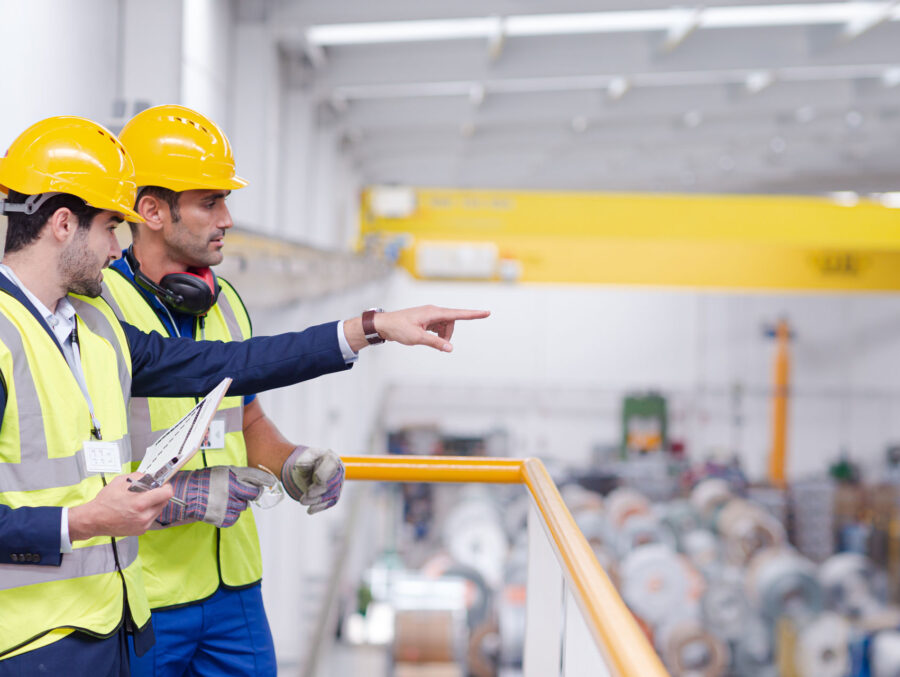
Achieving The Future Of Workplace Safety: Integration Of On-The Ground Expertise And Global Tech Solutions
The safety field is at an inflection point. Since the beginning of time, progress involved better engineering controls more extensive training, as well as more strict enforcement. These practices remain vital yet they've achieved an end in some industries. The next leap forward in technology will take place not from one advancement, but through the fusion of two capabilities that have generally developed in isolation with the deep understanding of safety experts who know their specific work environments, and the analytical power of technological platforms worldwide that can process huge amounts and volumes of data and uncover patterns that are not apparent to any one person. This merger is not about replacing humans with computers. It is about augmenting the human judgement with machine intelligence, ensuring that the safety professional who is on the ground will be more efficient, intelligent, and more influential more than before. In the future, workplace safety will be to those who are able to integrate these two worlds in a seamless manner.
1. These are only the boundaries of Purely Technological Approaches
The technology industry has frequently promised that software alone would solve the problem of workplace safety. Sensors could identify hazards algorithms would anticipate accidents and artificial intelligence would guide workers in what to do. This has always failed because safety is a fundamentally human problem. It is a matter of human behavior, people's judgments, relationships and human consequences. Technology may inform and facilitate, but it cannot replace the nitty-gritty knowledge that an skilled safety professional brings to an increasingly complex workplace. The future lies in integration and not to replacement.
2. Beyond the limits Purely Human Approaches
Conversely, purely human approaches have reached their limit. Even the most knowledgeable safety expert can only look at the world in a certain amount, recall how much, and connect the dots. Human judgment is subject to bias, fatigue as well as the limitations of one's own perspective. Each person cannot hold in their minds the patterns that emerge over a multitude of websites as well as the top indicators that have preceded events elsewhere, and the regulatory changes that impact sectors they do not follow. Technology expands human capabilities beyond these natural limits, providing recall, pattern recognition and global visibility that can enhance rather than replace professional judgment.
3. Predictive Analytics tells you where to Look
The most potent application of the merged capabilities is predictive analytics that tells on-the-ground experts where to focus their efforts. The software analyses historic incident data, near miss reports, audit findings and operational metrics to discover particular locations, processes, and risks that are associated with them. Safety professionals then research these risks, using a human judgement to comprehend what the numbers mean when viewed in the context of. Are the risk predictions real? Which are the primary factors driving them? What kind of interventions are appropriate with regard to local restrictions and culture? The technology points; Humans make the decisions.
4. Sensors and wearables can create continuous Data Streams
The explosion of wearables as well as environmental sensors produce continuous streams of important safety-related data that is impossible for humans to collect. Heart rate variability indicating worker fatigue. The air quality tests can identify dangerous exposures. Location tracking allows for the identification of unauthorised access into hazardous areas. Motion sensors detecting slips or falls. International platforms associate this data across different regions and sites and are able to discern patterns that require personal attention. Experts in the field then examine by validating sensor readings understanding context, and determining the most appropriate response. Sensors give us the data but the human experts give their interpretation.
5. Global Platforms Allow Local Benchmarking
Safety professionals have always wondered how their performance compares to other colleagues, however, meaningful benchmarks weren't readily available. Global technology platforms are changing this, by aggregating non-anonymised data across industries and regions. An administrator of safety in Malaysia is now able to view how their incident rates their audit findings, incident rates, as well as leading indicators measure up to similar facilities in their area and globally. This information informs the setting of priorities and helps justify resource requests. When local experts can show that their performance is not as good as regional peers, they gain credibility for investing. If they are leaders it, they get credibility and acknowledgement.
6. Digital Twins Allow Remote Expert Consultation
Digital twin technology which makes virtual replicas of physical workplaces that update in real time -- allows for a fresh method of expert consulting. When an on-site safety representative encounters a complex problem they are able to connect remotely to global experts who can investigate the digital model, study relevant data, and offer recommendations without the need to travel. This makes it easier to access expertise, allowing facilities operating in remote locations or economies to benefit from top-quality knowledge that otherwise would not be accessible or cost prohibitive.
7. Machine Learning Identifies Leading Indicators
Traditional safety indicators are totally ineffective. They only tell you what's happened. Machine learning is applied to integrated datasets is increasingly adept at identifying key indicators that are able to predict future incidents. Changes in the pattern of reporting for near-misses. Modifications to the types of observations reported during safety walks. It is possible to observe a delay between the detection of hazards and the correction. These top indicators, which are identified by algorithms, become central points for local experts who will investigate the factors creating the shifts and intervene before incidents occur.
8. Natural Translation Processing Extracts Insight from Unstructured Data
The majority of relevant safety information is found in unstructured documents, including investigation reports, safety meetings minutes, interview notes, email conversations. Natural language processing technology within integrated platforms can evaluate these documents at a massive scale, identifying themes, sentiment shifts and new issues that no human reader could take in. When the software detects individuals across several sites express similar discontent with the same procedure that it notifies regional and international experts who will determine whether the procedure itself is in need of adjustment, instead of just local enforcement.
9. Training is personalised and flexible
The merger of on-the-ground expertise combined with modern technology facilitates training that can be tailored to the individual employees' needs. The platform tracks every worker's work, experience, background, and completion of training. When patterns indicate specific knowledge deficiencies--for instance, workers in certain positions who are frequently participating in specific kinds of incidents--the system suggests specific education interventions. Local experts look over these recommendations in adjusting them to the context, then supervise the training. Training is continuous and personalized instead of being sporadic and general providing for actual needs, rather than merely addressing the requirements of assumed.
10. The role of the Safety Professional enhances
The most significant result of this merger is the advancement of the safety professional's role. Being freed from data collection and reporting tasks that software is better at handling, local experts are able to focus their attention on more profitable tasks such as building relationships with employees, understanding operational realities and designing effective interventions and influencing the organizational culture. Their expertise is valuable because it's based on the data they couldn't have collected themselves. Their recommendations are more reliable because they are grounded in the evidence that goes beyond personal experiences. The future workplace safety professional does not face threats from technology but empowered by it - more experienced, more influential and more effective than ever before. See the top health and safety software for site recommendations including occupational health and safety careers, ohs act, ehs consultants, health and safety jobs, personnel safety, safety moment ideas, safety management system, health safety and environment, office safety, safety report and more.
